Maximum Safety for Your Rotary Kilns: The IRT KilnMonitor System
High-Precision Infrared Monitoring for the Cement and Process Industry
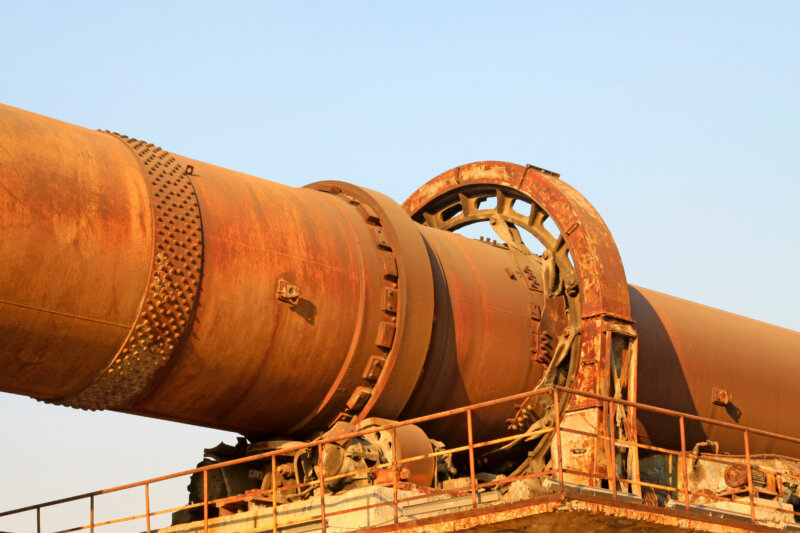
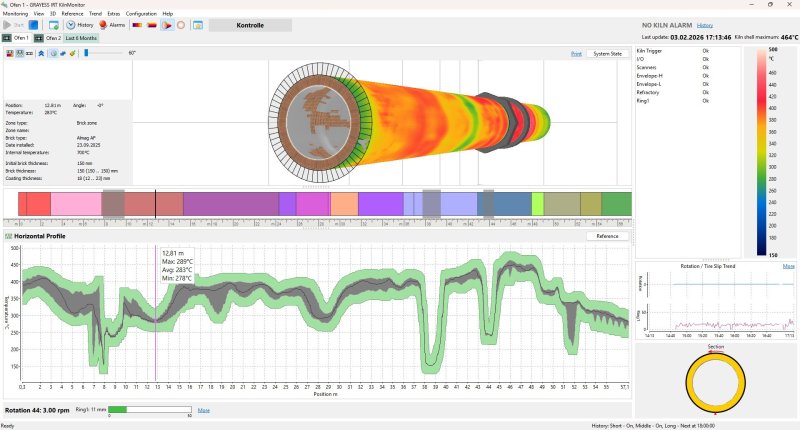
In the world of high-temperature processes, downtime is not an option. The KilnMonitor System is the leading solution for the thermal monitoring of rotary kiln shells. By using state-of-the-art infrared 2D cameras, we protect your equipment from unpredictable damage, optimize maintenance cycles, and increase production efficiency.
Why Thermal Monitoring is Critical
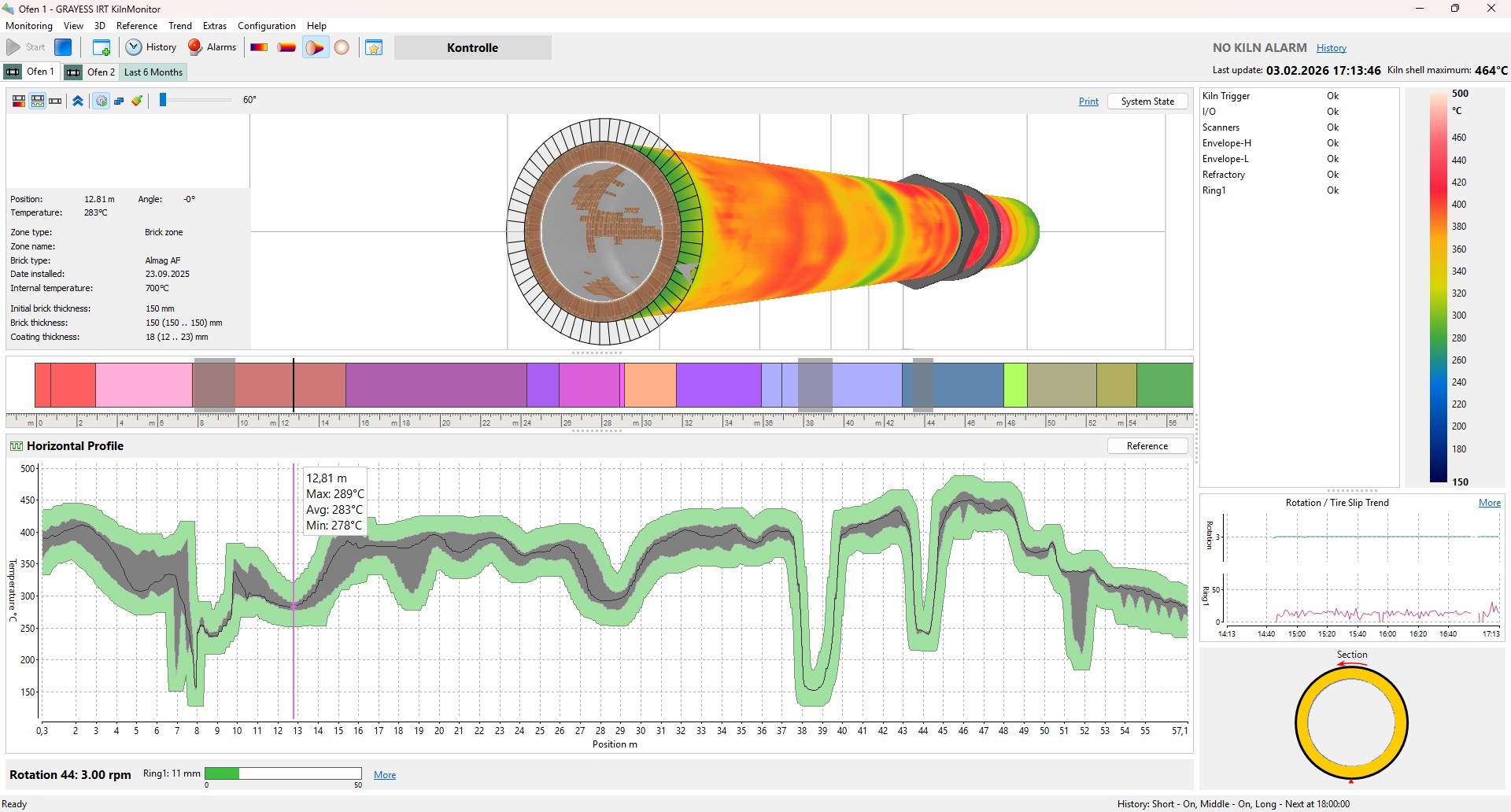
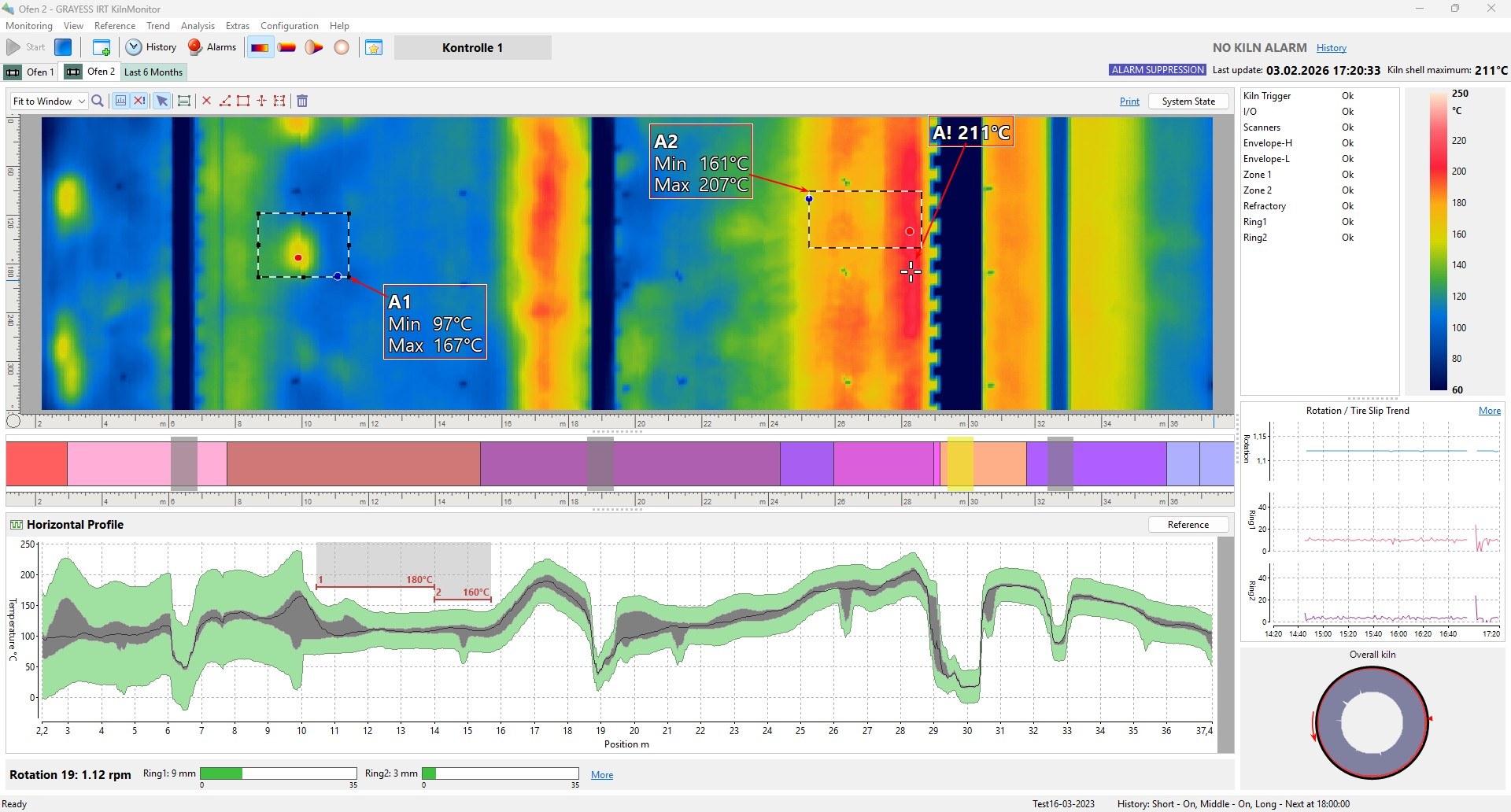
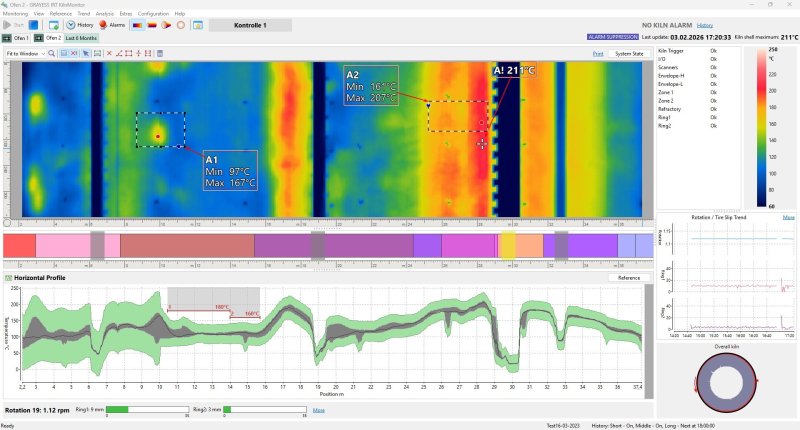
Hot spots on the kiln shell are often the first signs of critical refractory lining defects. At the same time, low-temperature zones provide information about undesirable coating or ring formations inside the kiln. Our system makes these hazards visible before they lead to costly failures.
Your Advantages at a Glance:
- Uncompromising Precision: High-performance infrared cameras "Made in Germany" deliver detailed thermal images without mechanically moving parts.
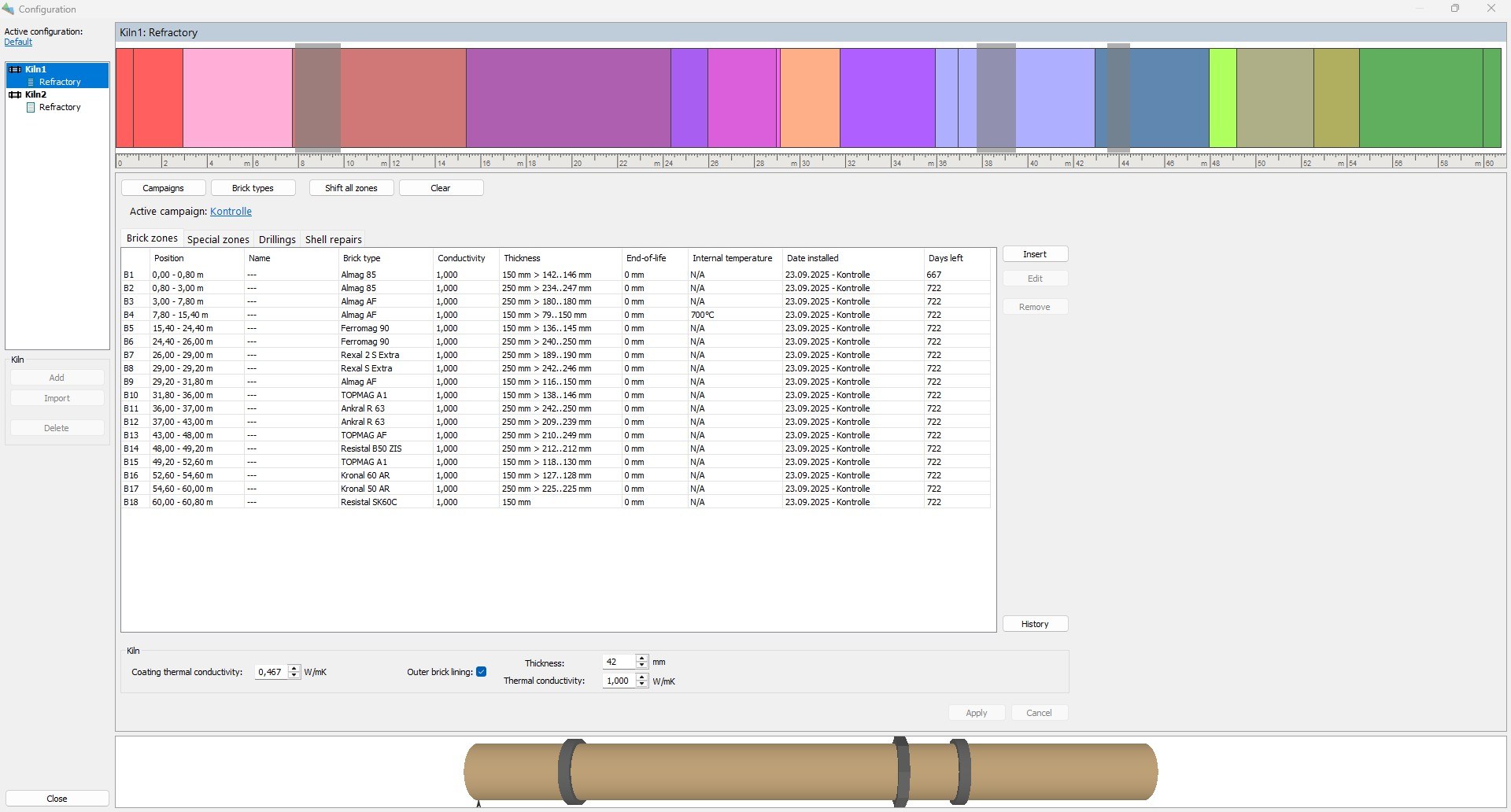
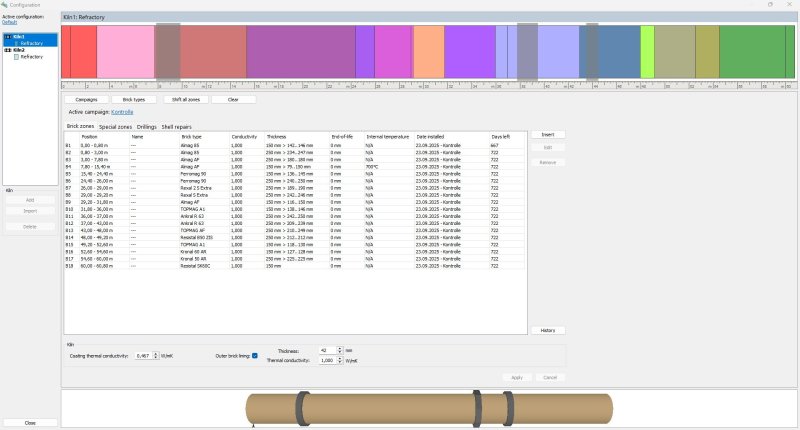
- Intelligent Analysis: The software automatically calculates the remaining refractory thickness and the thickness of material rings.
- Early Warning System: An integrated Hot Spot Finder immediately marks critical areas with exact coordinates and enables targeted control of external cooling fans.
- Comprehensive Documentation: All data is continuously stored in a database, including historical references and "worst-case" images.
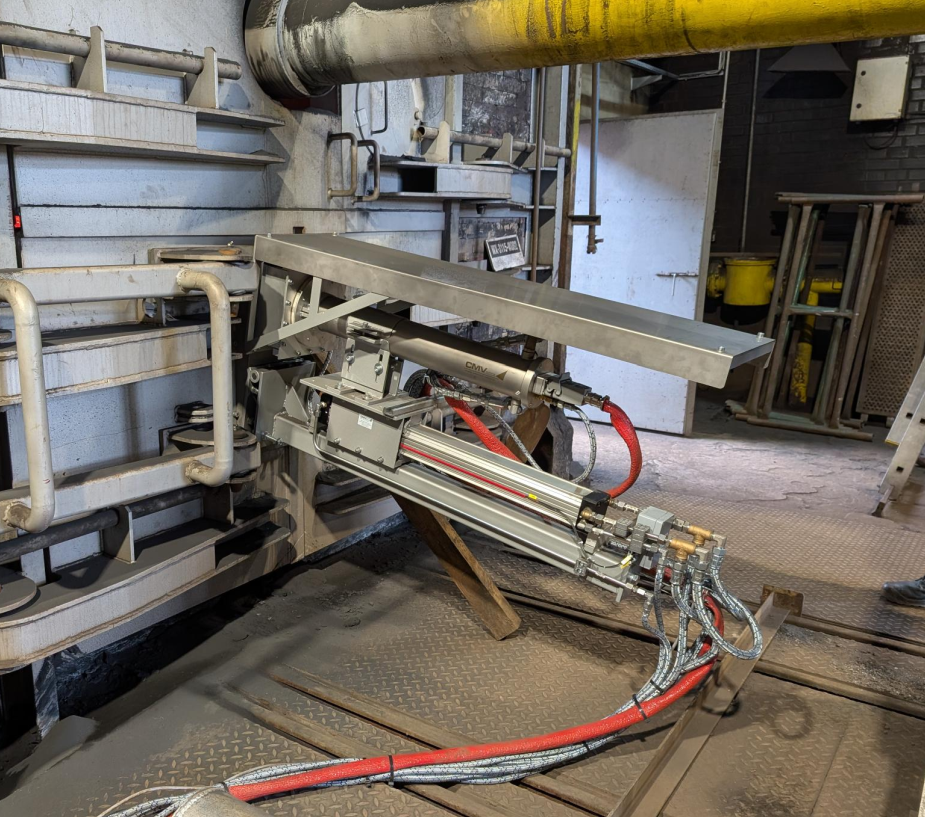
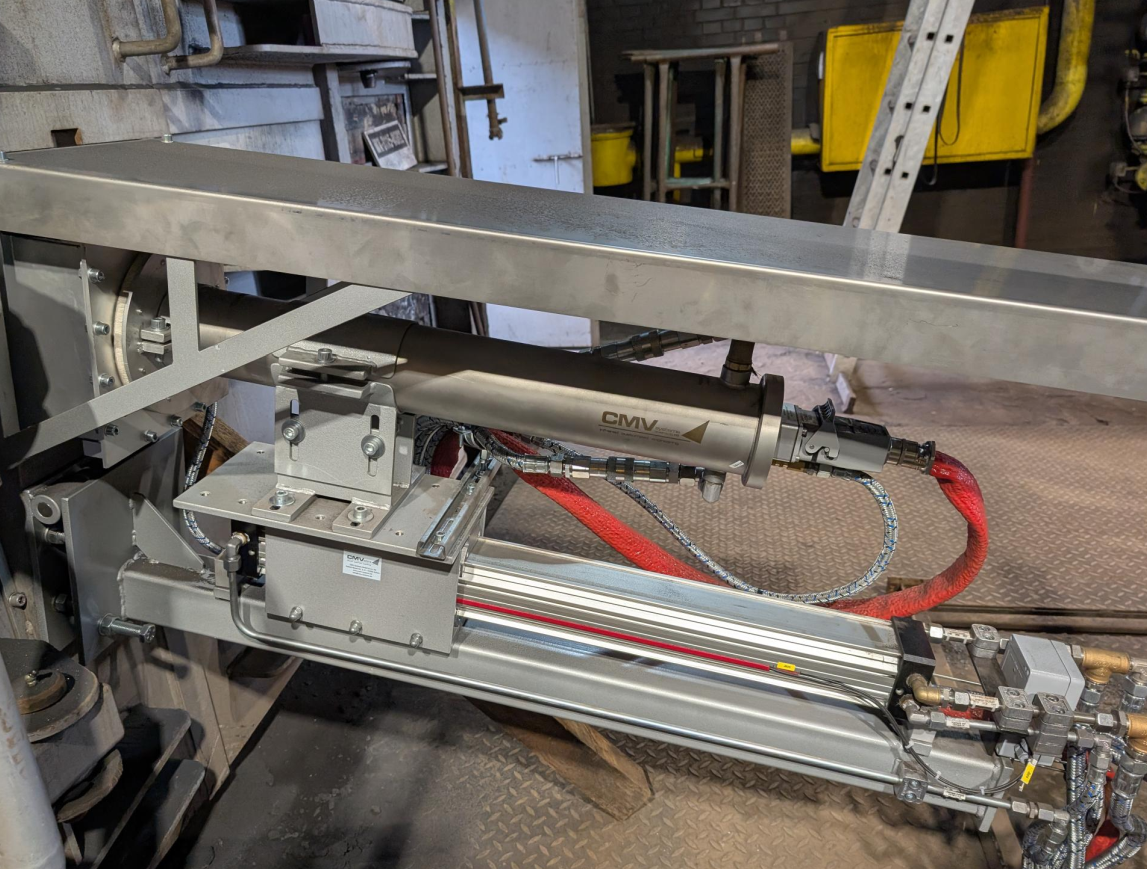
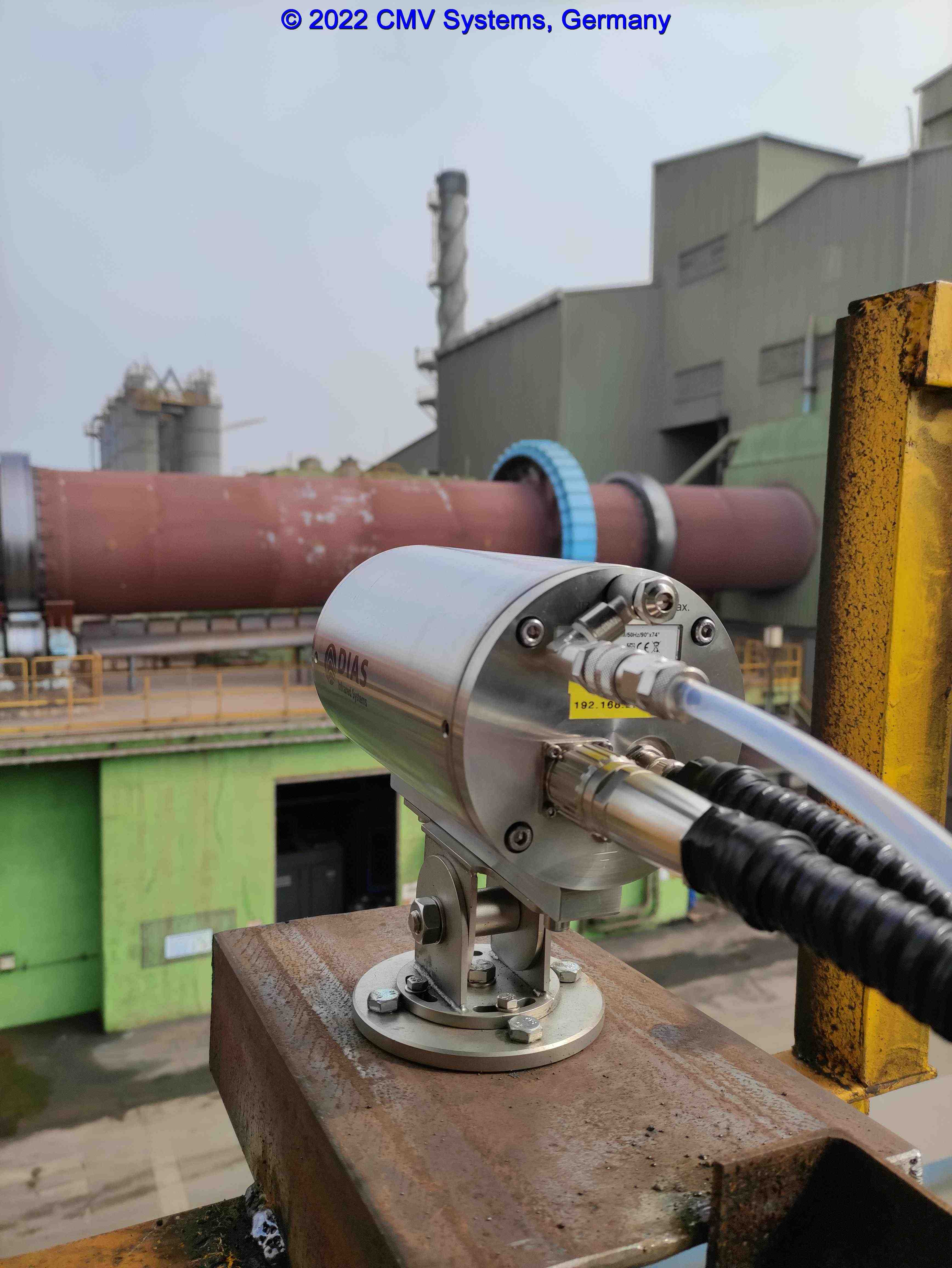
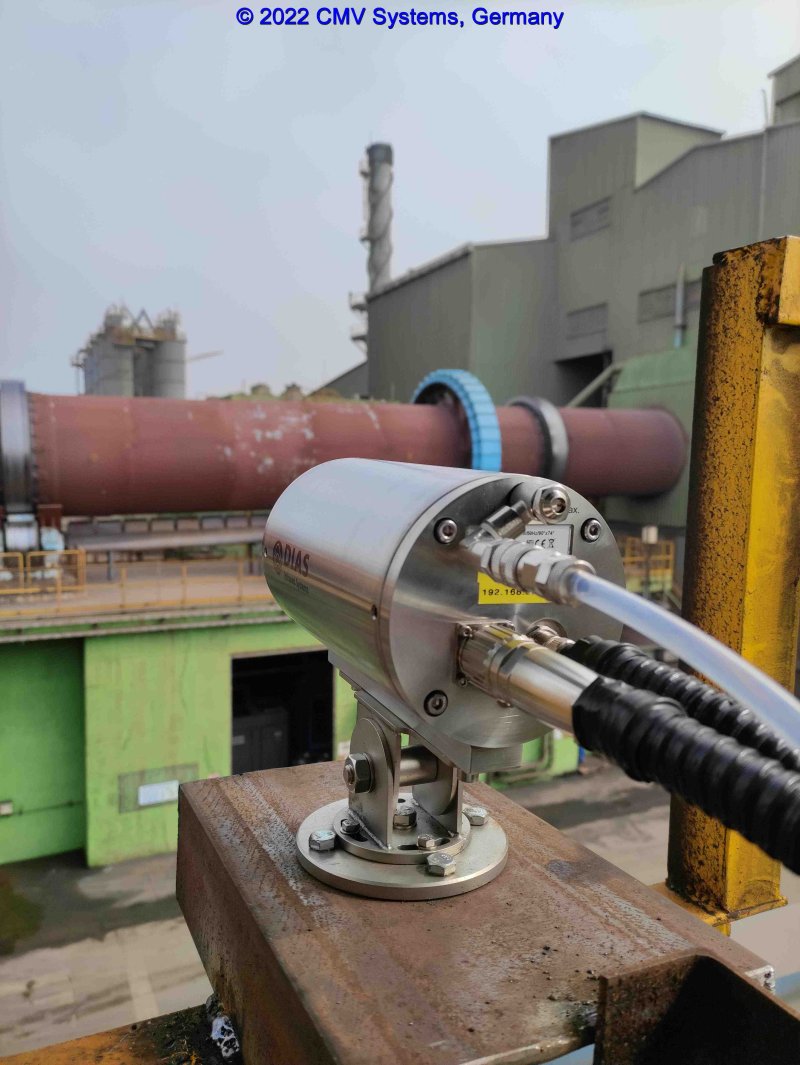
- Industrial Robustness: Our cameras are housed in special protective enclosures with air purging and cooling to operate reliably even under the harshest conditions (up to 150 °C / 302 °F ambient temperature).
The Technology Behind It
The system is based on state-of-the-art microbolometer arrays with a resolution of up to 640x480 pixels.
- Measurement Range: 0 °C to 650 °C (32 °F to 1,202 °F).
- Interfaces: Gigabit Ethernet or fiber optics for transmission lengths up to 2,000 m.
- Flexibility: Adjustable opening angles (up to 90° x 74°) for any kiln geometry.
- Integration: Full connectivity to your control system via OPC UA or Profibus.
Everything from a Single Source
We accompany you from the initial consultation and feasibility studies to installation, training, and after-sales service. With the KilnMonitor System, you receive a turnkey solution for process diagnostics and automation.
Would you like to take your plant safety to the next level? Contact us for an individual system analysis or a non-binding quote.
CMV Systems – Infrared customized engineering.
FAQ: Frequently Asked Questions about the IRT KilnMonitor System
1. Why is a 2D camera better than a conventional scanner?
Unlike mechanical scanners, the system uses high-resolution 2D microbolometer arrays without moving parts. This makes the system extremely low-maintenance and durable. Furthermore, 2D technology enables shadow-free monitoring without the need for additional pyrometers.
2. How does the system detect damage to the refractory lining?
The system uses current kiln shell temperatures and compares them with historical data from the integrated database (Brick Management). Based on this data, the software calculates the remaining thickness of the refractory lining and the thickness of ring formations.
3. What happens when a hot spot is detected?
The integrated Hot Spot Finder marks the exact coordinates on the kiln shell and displays a detailed zoom image. The system can then trigger alarms (acoustic, visual, or via OPC) and even control external fan turbines with coordinate precision to provide targeted cooling to the affected area.
4. Can the system be used in extreme weather conditions?
Yes. The cameras are housed in robust stainless steel protective enclosures (IP65). These feature a heater for cold environments as well as air purging and optional water cooling, allowing operation at ambient temperatures from -20 °C to +150 °C (-4 °F to +302 °F).
5. How is the system integrated into my existing control room?
The system is fully network-compatible via Ethernet. Modern interfaces such as OPC UA or Profibus are available for connection to higher-level control systems. Data can be transmitted over distances of up to 2,000 m via fiber optic cables.
6. How many kilns can be monitored simultaneously?
The software is designed for multi-kiln monitoring. Up to 3 kilns can be processed and visualized simultaneously per evaluation unit.
Downloads
Drehrohrofen_Prospekt2026.pdf
Download