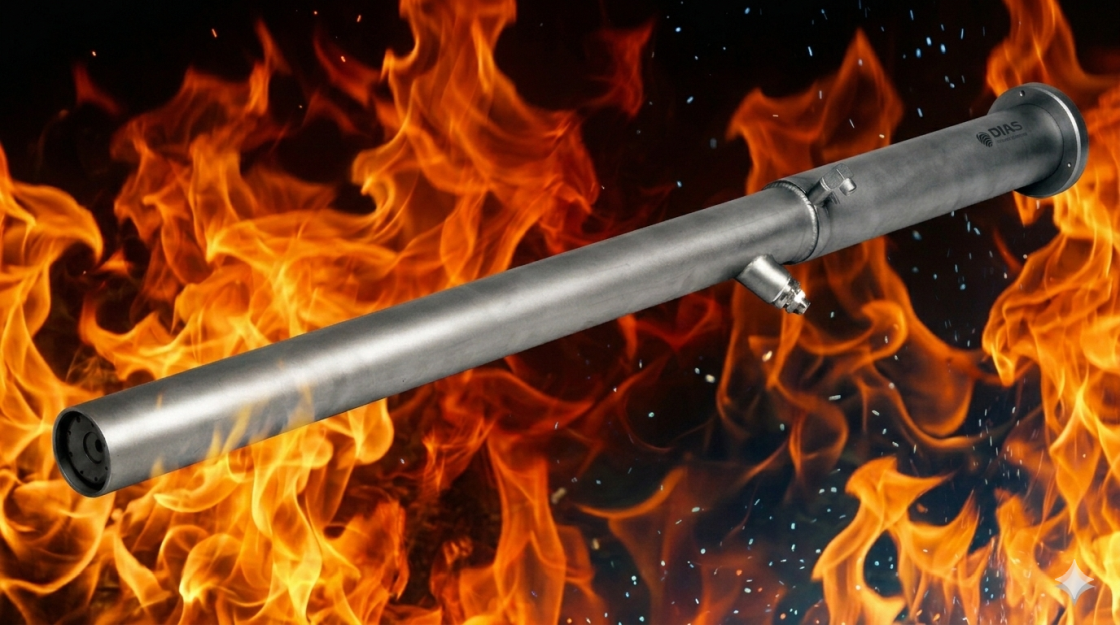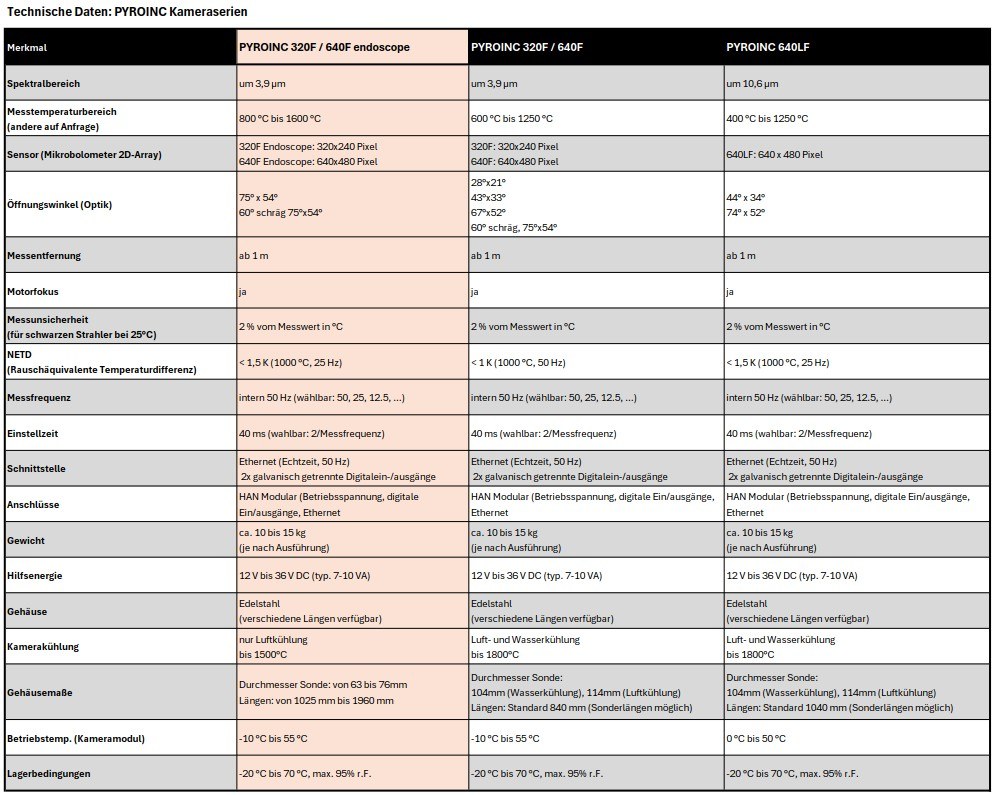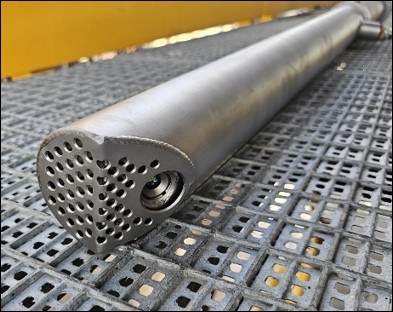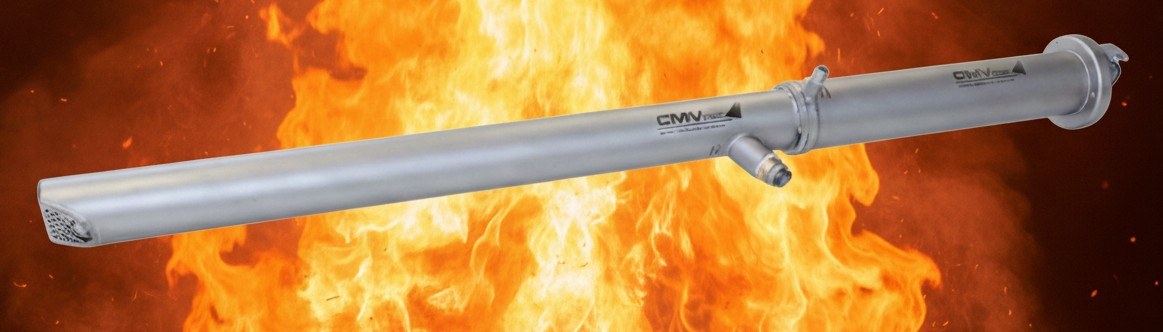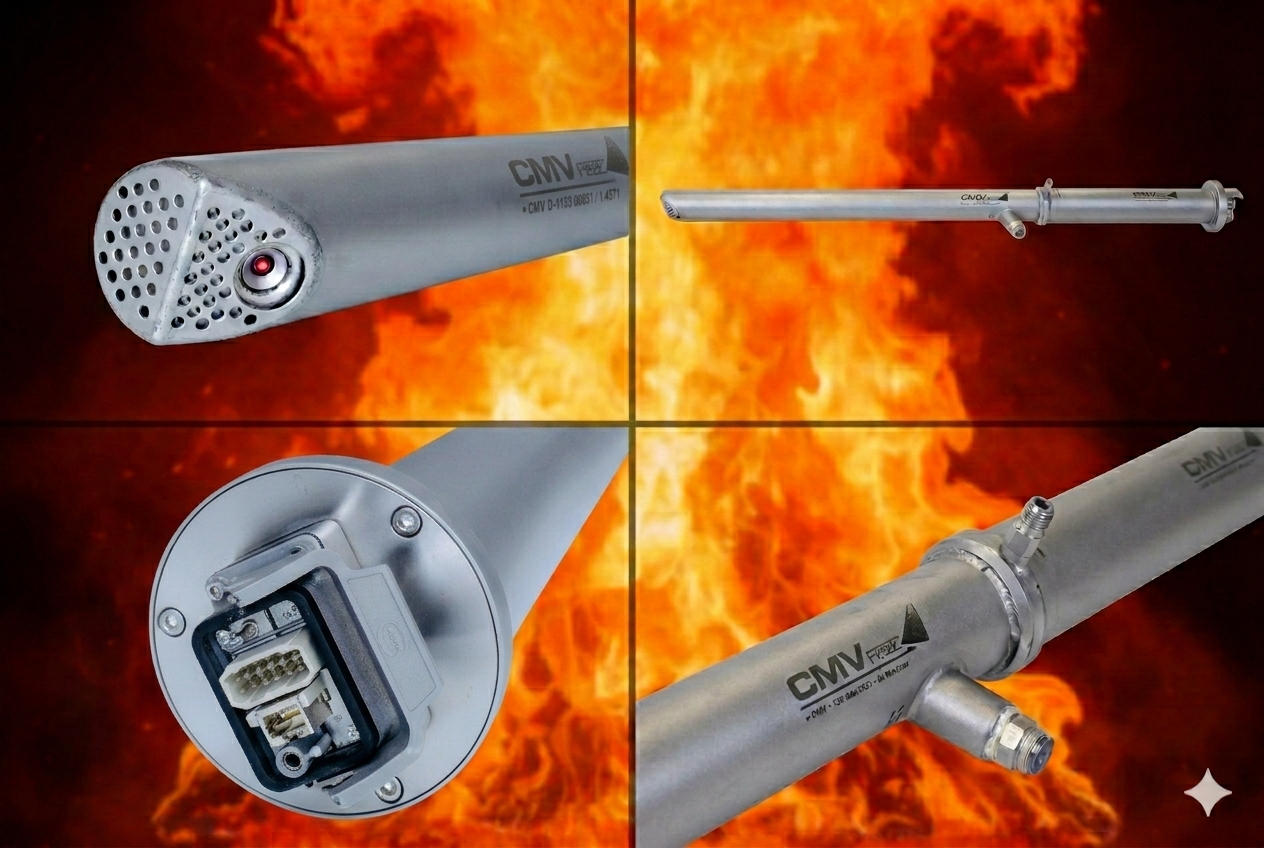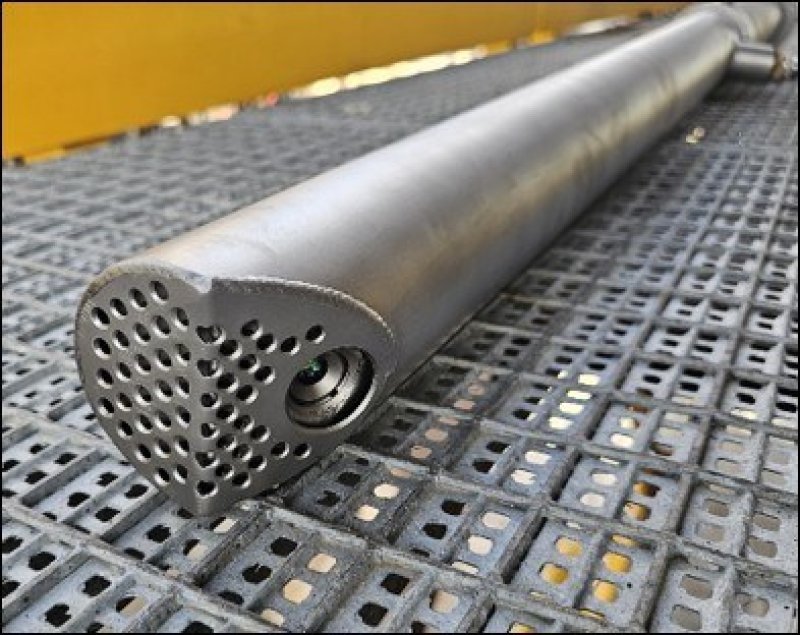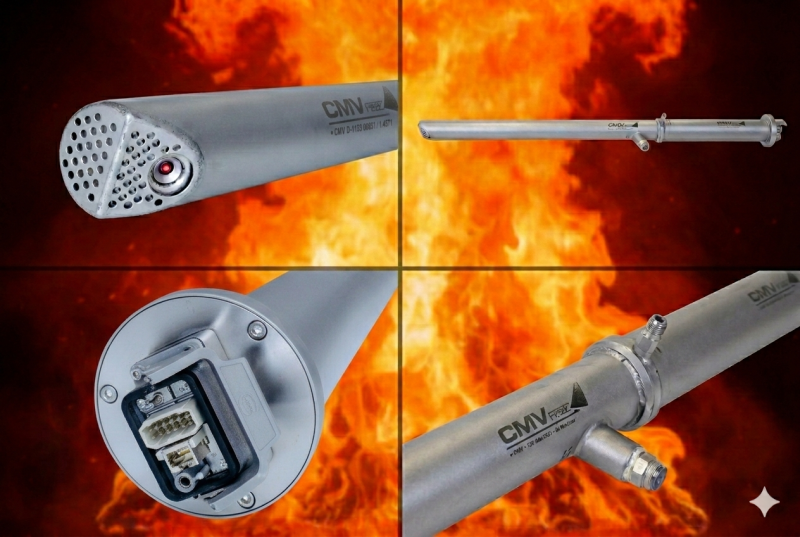
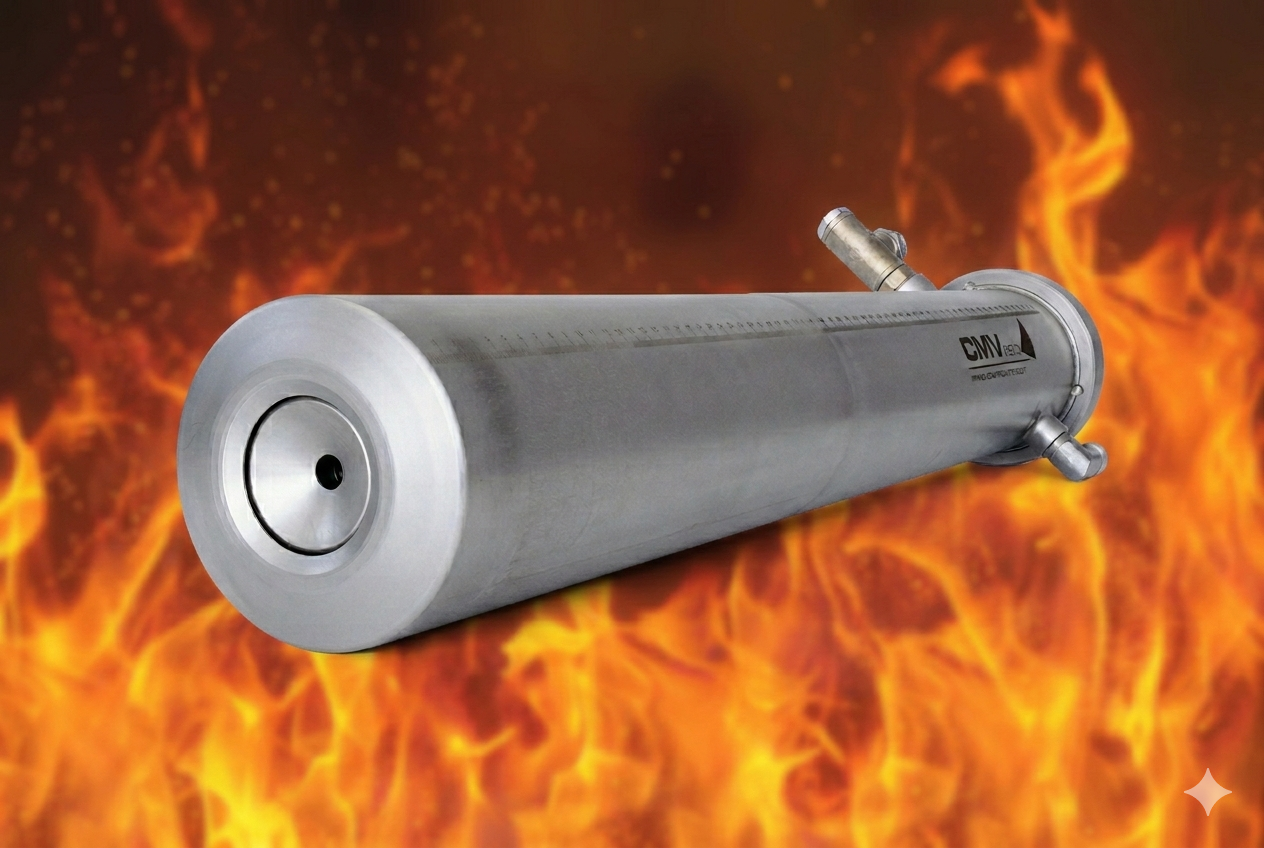
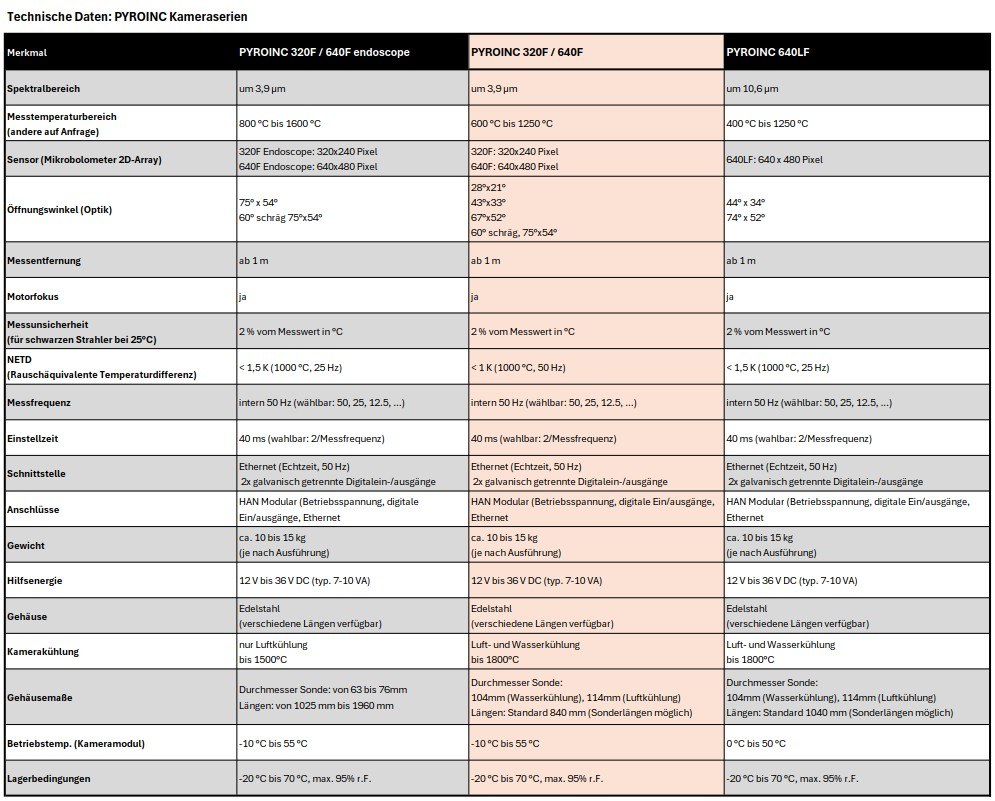
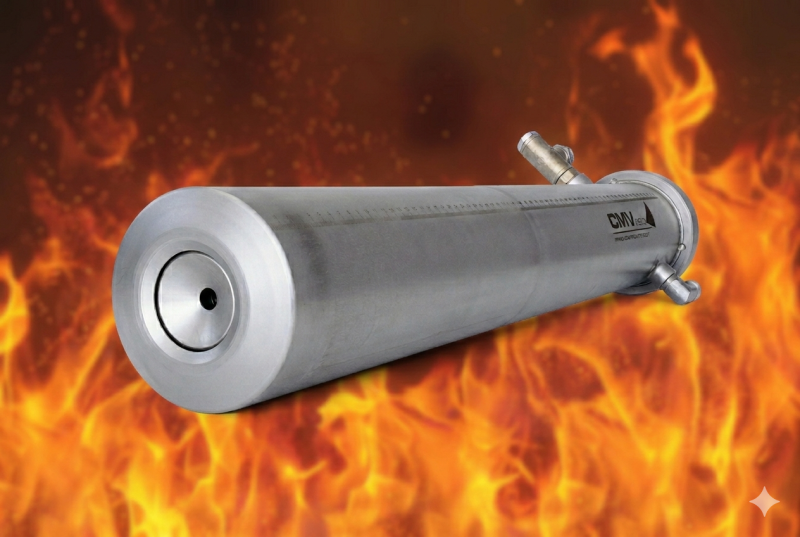
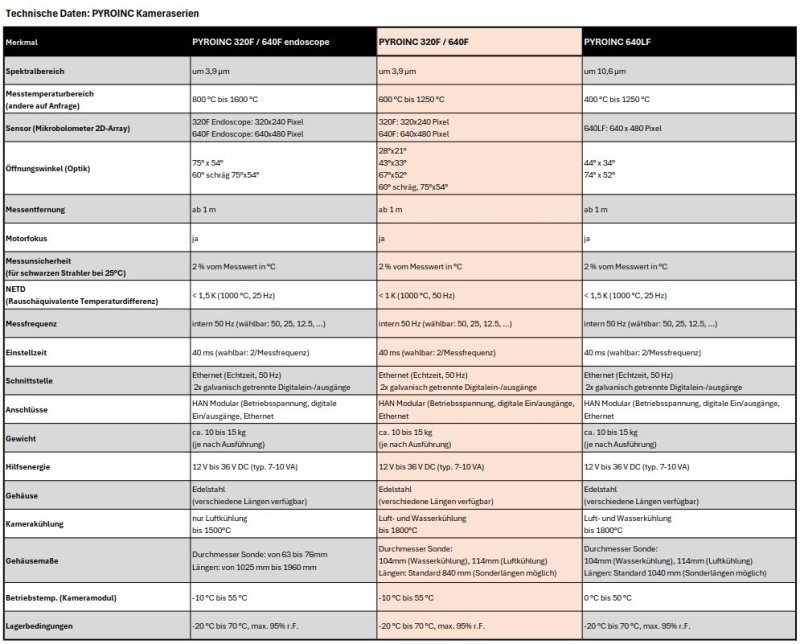
PYROINC is a specialized and extremely robust thermal imaging camera series for combustion chambers, measuring high temperatures in real time between 400 °C and 1,800 °C (752 °F – 3,272 °F). The motorized focusable borescope optics are protected by a sapphire window. The camera’s slim and robust stainless steel probe cooling jacket can also be additionally cooled with air or water.
Application Examples:
The probe cooling jacket can be inserted directly through an opening in the combustion chamber wall. The small entry aperture of the optics is air-purged. Together with an automatic retraction device, it is ensured that the system withstands the high temperatures and specific requirements of the installation site. The front part of the jacket withstands temperatures around 1,800 °C (3,272 °F). Thanks to the camera’s internal web server, remote access is possible at any time. This allows for convenient remote maintenance or the retrieval of thermography data and current operating status.
The Physical Optimum: Why the 3.9 µm Wavelength Makes the Decisive Difference in Your Temperature Measurement
In industrial process monitoring, infrared thermometry is a standard – but standard wavelengths often reach their physical limits. When combustion gases, water vapor, or CO2 obscure the view, conventional infrared cameras or pyrometers often only measure the temperature of the atmosphere, not that of your product. The solution lies in a precisely selected spectral range: 3.9 µm.
The Physics Behind Precision: The "Atmospheric Window"
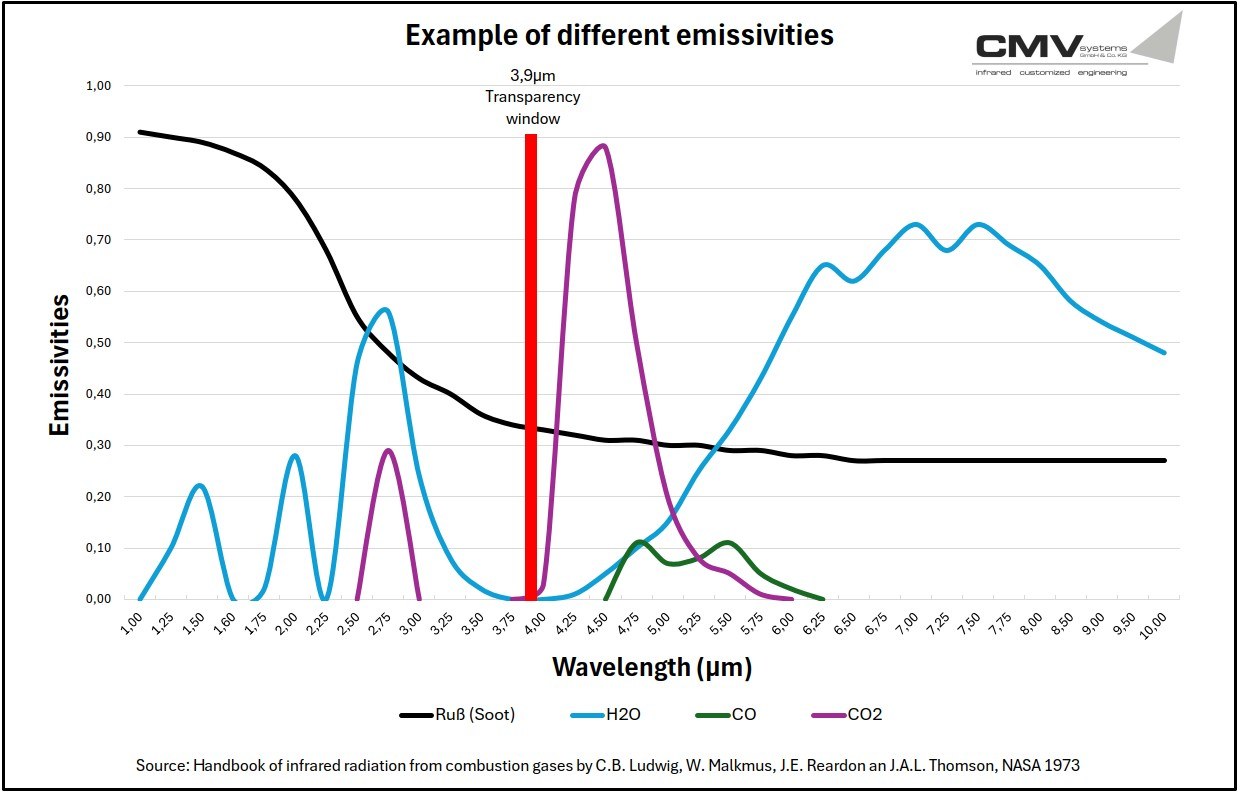
A look at the emission spectrum of typical combustion products clarifies the problem: Gases such as carbon dioxide (CO2) and water vapor (H2O) have distinct absorption bands in which they almost completely block infrared radiation or emit strongly themselves.
At a wavelength of 3.9 µm, however, a crucial phenomenon occurs: The emissivity of these gases drops to near zero. In this narrow band, the atmosphere becomes nearly transparent to the sensor.
Your Advantages with 3.9 µm Technology:
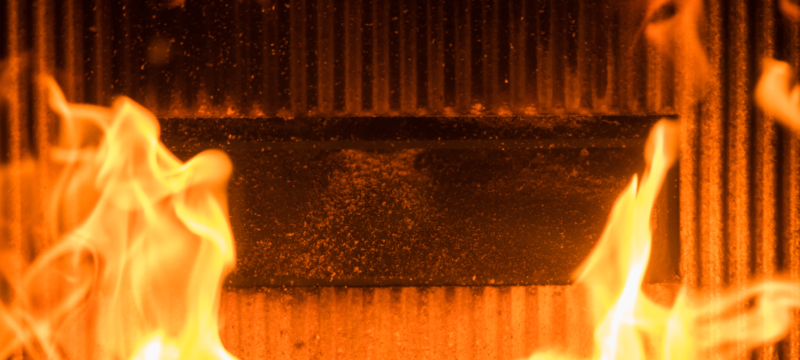
- Measurement through flames: In fired furnaces, the hot gases of the flame emit massively in the standard infrared range. A 3.9 µm sensor "sees" through this flame front and directly captures the thermal radiation of the workpiece or furnace wall behind it.
- Elimination of distance errors: When measuring over large distances, air humidity (H2O) often leads to signal losses. Since 3.9 µm lies outside the water absorption bands, your measurement signal remains stable and precise even over long distances.
- Higher accuracy for metals and ceramics: Due to physical properties, the emissivity of many technical surfaces is more stable and higher at shorter wavelengths than in the long-wave range (e.g., 8–14 µm). This reduces errors caused by background reflections and ensures a more linear, reliable temperature curve.
Conclusion for the User
Choosing a sensor in the 3.9 µm range is a decision for process reliability. It enables imaging through flames, minimizes systematic measurement errors, reduces waste due to temperature misinterpretation, and optimizes the energy efficiency of your plants.
Rely on measurement technology that understands physics. Rely on 3.9 µm.