
Precision in Extreme Conditions: What Sets These Models Apart
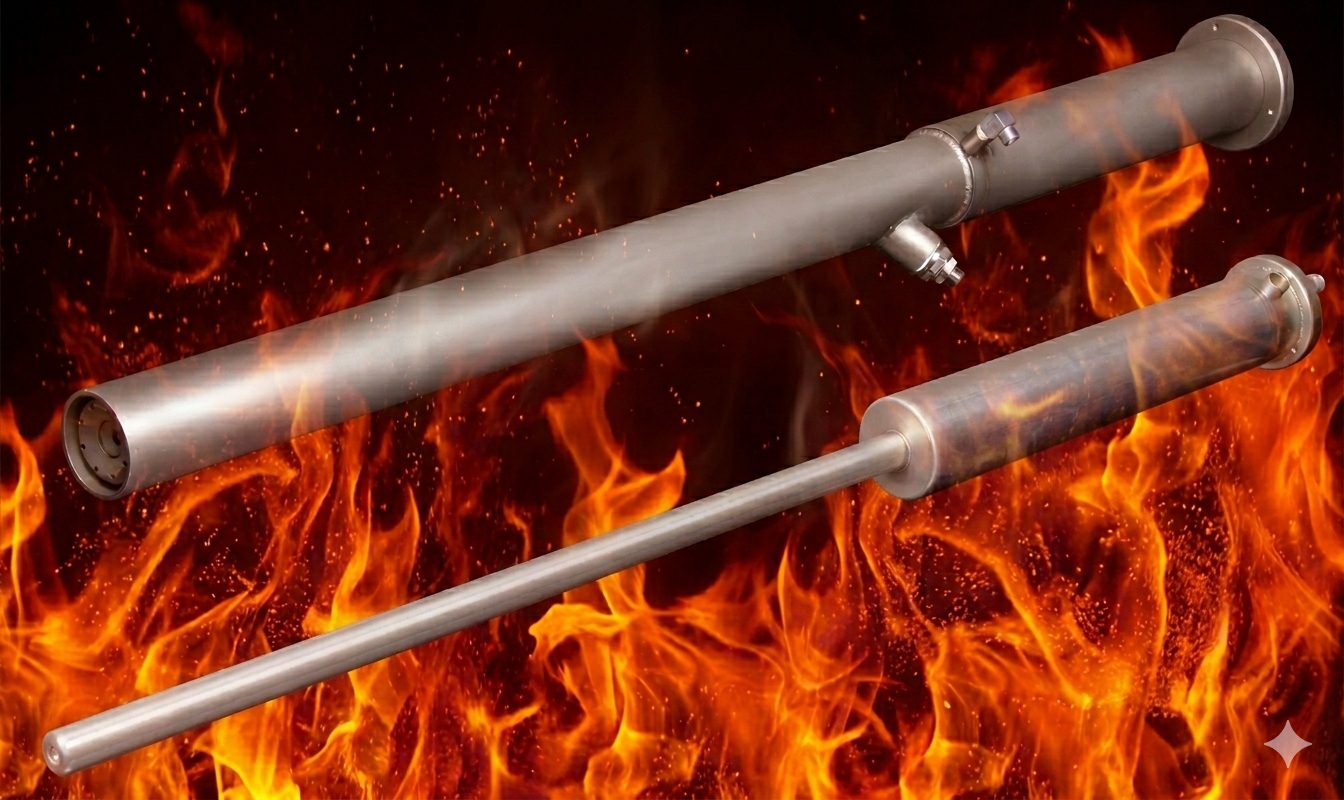
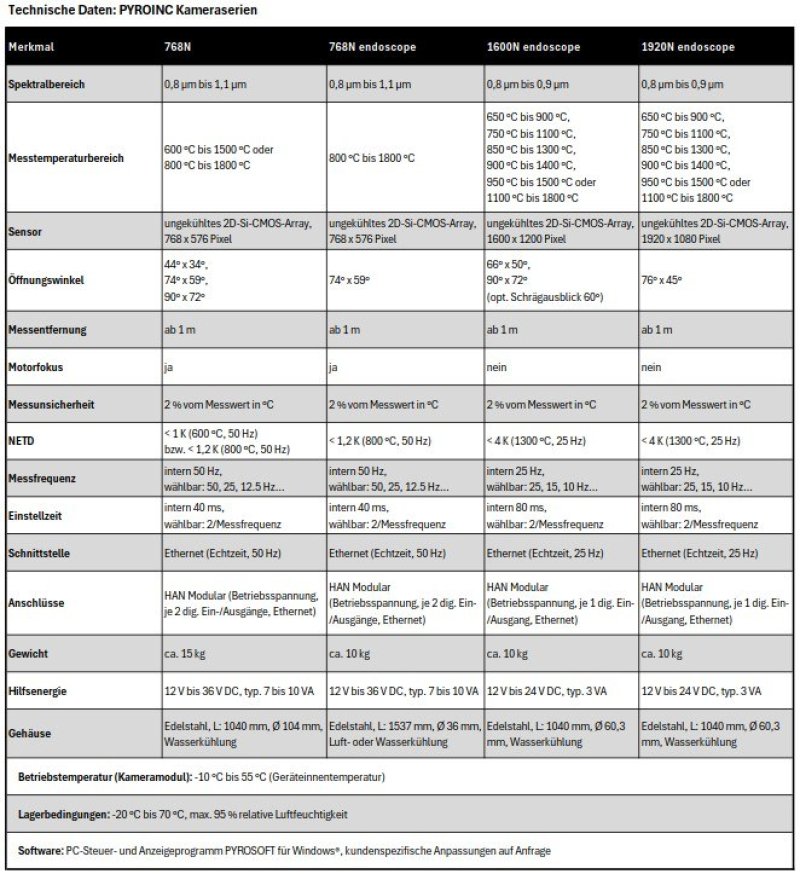
The 768N to 1920N series represents non-contact temperature measurement at the highest technical level.
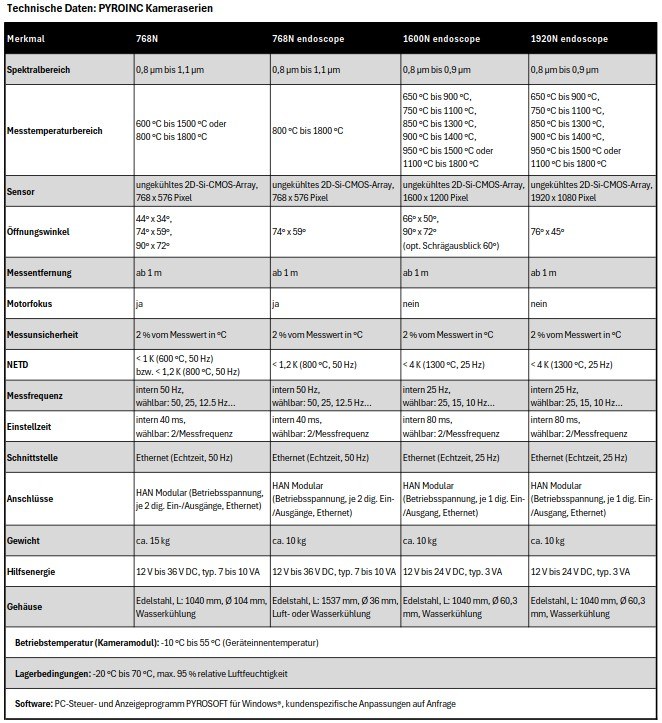
- Enormous Temperature Resistance: With measurement ranges from 600 °C to 1800 °C (1,112 °F to 3,272 °F), these cameras capture processes where conventional sensors would have long since melted.
- Razor-Sharp Thermography: While many industrial cameras provide coarse thermal images, the top-tier 1920N model offers Full HD resolution. This means even the smallest thermal details become visible.
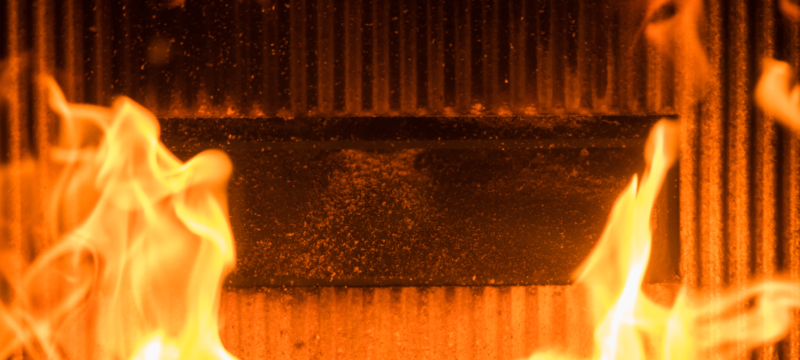
- The "Endoscope" Privilege: The endoscope models feature an extremely slim housing (down to Ø 36 mm). They can "look" directly into combustion chambers through the smallest openings.
- Real-Time Monitoring: Thanks to Gigabit Ethernet and a measurement frequency of up to 50 Hz, evaluation occurs without delay – critical for safety and process control.
- Indestructible (Made for Industry): Stainless steel housings with integrated water or air cooling guarantee 24/7 operation directly at the glowing heart of the action.
Where are these "Heat Professionals" used?
Anywhere heat must be controlled to guarantee quality and safety:
1. Glass Industry
- Melting Tank Monitoring: Control of glass quality and refractory lining.
- Forming: Checking temperature distribution during glass casting or blowing.
2. Metallurgy & Steel Plants
- Foundries: Monitoring molten metal during tapping or continuous casting.
- Reheating Furnaces: Optimizing the temperature of slabs or billets before rolling.
3. Cement and Power Plant Technology
- Rotary Kiln Burner Monitoring: Optimization of flame alignment.
- Combustion Chamber Control: Optimization of flame guidance and reduction of emissions through exact heat distribution.
4. Chemical Industry
- Reactors: Monitoring thermal processes in high-temperature reactors where chemical reactions require precise heat.
Which model is the right one?
- The All-Rounder (768N): Perfect for standard high-temperature applications with a wide field of view.
- The Spy (768N endoscope): Ideal for looking through tiny openings in combustion chambers.
- The Detail King (1920N endoscope): When you don't just want to know that it's hot, but need to analyze every detail of the surface structure inside the furnace.